Hawaii homeowners who incurred damage or lost their homes entirely now face uncertainty over whether their insurance will cover the damage. The Seattle Times recently interviewed several Hawaii residents who expressed concern over whether they will have any coverage. The eruption has so far destroyed about two dozen homes on Hawaii’s Big Island. Authorities reported about 20 cracks in the ground spewing toxic gas and lava as of Tuesday.
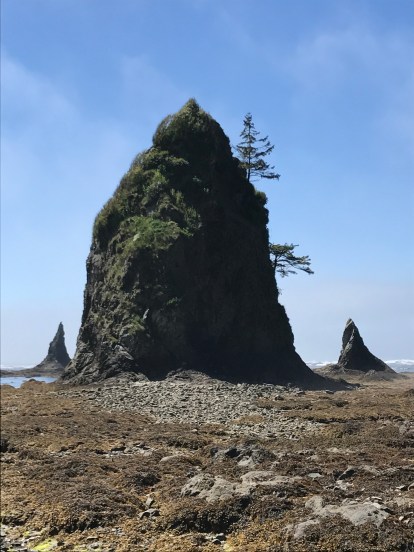
Sea-stacks on Cape Alava, near Ozette, Washington.
Few insurers write policies covering structures in the area because the U.S. Geological Survey classifies it as a high lava risk. Homeowners may have been able to obtain coverage through the Hawaii Property Insurance Association, a nonprofit insurance group created by the state government to fill the gap in coverage for people living in lava risk areas.
Even people living outside the affected areas are questioning whether their policy covers lava damage. While fire insurance policies may cover lava, homeowner’s policies often have explicit exclusions for lava damage.
This can lead to complex coverage questions: if lava causes a forest fire and the fire, not the lava, burns your house down, can the insurer deny payment based on a lava exclusion? In Washington, the answer’s probably not. Washington applies the “efficient proximate cause” rule that can ultimately require the company to cover a loss if the causal chain of events includes a covered loss, despite the involvement of an excluded cause.
Ultimately, insurance coverage issues will cause at-risk homeowners to suffer significant uncertainty in addition to existing concerns about natural disasters.
Self-driving vehicles are already on roads in several cities and are predicted to become normal in the next few decades. How will your insurance cover you if you’re the operator of a self-driving car? If someone else’s self-driving car injures you or damages your property, will the owner have coverage for your loss?
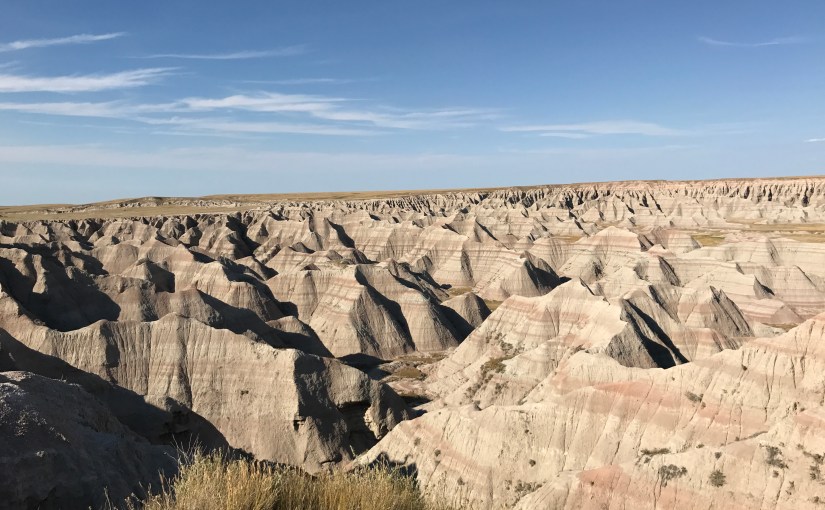
The Badlands, South Dakota.
First, it may be a moot point because self-driving cars could reduce accidents to the point where the cost of insurance coverage becomes nominal or coverage becomes totally unnecessary. Preventable human error – texting, adjusting the radio, hasty lane changes, etc. – is estimated to cause 94% of all motor vehicle collisions. One industry forecast projected widespread adoption of autonomous vehicles would reduce premiums by 80% and lead to a $25 billion loss for insurers by 2035 as reduced accidents reduce the need for coverage.
On the other hand, while autonomous cars may reduce the need for liability and collision insurance, they may require new forms of insurance such as cyber security coverage. Even existing conventional cars can be hacked, and self-driving cars are likely to grow more and more vulnerable to electronic intrusion. Imagine if your car were susceptible to the same malware, ransomware or other abuse as your computer or phone. It may ultimately be necessary to procure cyber security coverage for your autonomous vehicle.
One possible answer is manufacturers may simply assume all liability associated with their autonomous vehicles. Google, Volvo, and Mercedes-Benz already assume liability any time one of their vehicle’s self-driving system is at fault for a collision. Tesla has its own insurance program for owners of Tesla self-driving vehicles.
Another suggestion is future drivers may not need insurance because they may not own their cars. Self-driving vehicles may lead to widespread reliance on car sharing services. Unlike Lyft or Uber which rely on human operators, self-driving ride-share vehicles could operate around the clock at a much lower cost, making it practical for urban drivers to rely entirely on ride-sharing for daily transportation. Future autonomous vehicle ride-sharing fleets would likely self-insure, as Google’s subsidiary Waymo intends to do when it launches its self-driving ride-share service in the coming months.
Whatever the result, self-driving cars will ultimately present some form of risk, and manufactures, drivers, municipalities and insurers will have to decide how to allocate that risk among themselves.
CBS’ recent investigation found the federal National Flood Insurance Program (“NFIP”), intended to benefit homeowners caught in flood disasters, actually winds up paying most of its money to help insurers avoid paying claims.
The problem is NFIP doesn’t pay flood victims directly. Instead, NFIP collects premiums and taxpayer dollars, then turns the money over to private insurers with minimal oversight. Exacerbating the problem is most homeowners living in federally-designated “flood plains” are legally required to purchase flood coverage (sometimes by the government, sometimes by their mortgage lender).
A 2016 federal oversight report found NFIP often pays insurers more than it pays the homeowners it’s supposed to benefit. The report called out one example in which NFIP paid an insurer over $87,000 to defend a claim worth a maximum of $25,000. The report noted some insurance defense attorneys ran up the bill by, for instance, insisting on live, in-person testimony (typically including legal fees, court reporter fees, travel expenses and a conference room) just to verify receipts. Another problem is NFIP will automatically pay, without scrutiny, any insurer defense “expert” expense as long as it falls below $2,500.
The report emphasized many of these problems plagued the victims of 2012 Superstorm Sandy, which caused extensive flooding in New Jersey and other Mid-Atlantic areas. One estimate suggested Superstorm Sandy flood claims were underpaid by at least $189 million.
Part of the problem is the NFIP is essentially a risk-free investment for participating insurers, because any shortfalls are backed by taxpayer money. But after huge losses following Hurricane Katrina, Congress started to investigate the NFIP’s losses and suggested shuttering the program. That gives insurers in more recent disasters like Superstorm Sandy a huge incentive to lowball claims, keep NFIP’s losses low, and lower the risk Congress acts to reform or deactivate NFIP.
One important right policyholders have is to be fully compensated or “made whole” when the insurer improperly denies coverage or payment of benefits. Some insurers argue, incorrectly, that they can avoid making the policyholder whole by paying the disputed policy benefit after the policyholder files a lawsuit. That’s incorrect because by the time the policyholder files suit, they’ve typically lost significantly more than just the disputed policy benefit: they’ve hired lawyers or experts, paid for repairs or other bills out of pocket, or lost business income because they couldn’t afford to effect repairs without insurance coverage.
In its April 23, 2018 decision in Williams v. Foremost Insurance Co., 2:17-CV-1113-RSM, 2018 WL 1907523 (W.D. Wash. Apr. 23, 2018), the U.S. District Court for the Western District of Washington analyzed and rejected the argument that the insurer can escape a bad faith lawsuit by retroactively paying the benefits it denied in the first instance.
Williams brought a claim for vandalism damage under her insurance policy with Foremost. Foremost denied Williams’ claim for insurance benefits, arguing that the vandalism was caused by people who were Williams’ tenants at the time of the damage. Foremost ignored Williams’ argument the loss was covered because the vandals were former as opposed to current tenants.
Williams brought a lawsuit alleging claims for bad faith and violations of Washington’s Insurance Fair Conduct Act (“IFCA”) and Consumer Protection Act (“CPA”); those claims entitled Williams to damages beyond the amount of the disputed insurance benefit, such as attorney’s fees, court costs and treble damages.
The court promptly ruled that coverage existed and ordered Foremost to pay the disputed benefits. Following that ruling, Foremost paid Williams $187,001.43 in benefits owed.
Foremost then asked the court to dismiss Williams’ claims for bad faith and for CPA and IFCA violations. Foremost claimed that, since it paid the policy benefits Williams claimed, Williams had no right to assert any additional claims. The Court rejected Foremost’s arguments.
First, and most importantly, the court rejected Foremost’s argument that Williams’ remaining claims were barred because Foremost ultimately paid the insurance benefits, and that Williams could not bring further claims without producing “her complete financial records.” The court determined “Foremost’s insurance payment to Ms. Williams is irrelevant to the issue of bad faith” and that “Washington State law does not appear to provide that retroactive payment for an insurance claim extinguishes all the alleged harm to a plaintiff[.]”
Snow lake trail, Central Cascades.
Next, the Court rejected Foremost’s argument that its claim denial was reasonable in light of the evidence Foremost had at the time. The Court noted that Foremost’s evidence showed only that the vandalism was caused by former – not current – tenants, and that Foremost had no evidence that the vandals were Williams’ tenants at the time the vandalism occurred. Moreover, Williams explicitly advised Foremost the vandals were not tenants at the time of the damage.
Finally, the Court also emphasized that an insurer’s bad faith denial of coverage injures the insured beyond merely the dollar amount of the policy benefit. In this case, Williams suffered additional damages because Foremost’s wrongful denial delayed her ability to repair the vandalism damage to her building; Williams also had to hire an expert, take construction loans, and perform some repairs herself.
The Williams decision emphasizes insurers cannot escape bad faith lawsuits merely by paying the disputed benefits after the fact.
Whether a school bus is an automobile would seem to be a matter of common sense. Unfortunately for the policyholder in one recent lawsuit, it’s actually a matter of reading the fine print.
Washington’s Court of Appeals recently issued a ruling that significantly limits policyholders’ coverage under many automobile insurance policies. In Koren v. State Farm Fire and Casualty Company, Case No. 34723-1-III, the court interpreted State Farm’s insurance policy as excluding coverage for injuries Mrs. Koren’s son sustained in a school bus crash.
Mrs. Koren’s State Farm policy covered harm “caused by an automobile accident.” After Ms. Koren’s son was injured in a school bus crash, Mrs. Koren submitted a claim under her State Farm policy. State Farm denied coverage, claiming school buses are not “automobiles” under State Farm’s policy.
The Court of Appeals agreed with State Farm. State Farm had added to its policy a limited definition of “automobile,” which meant, under the policy, only automobiles “designed for carrying ten passengers or less.” Mrs. Koren relied on existing Washington Supreme Court precedent holding that the term “automobile accident” in an insurance policy may be broader than the definition of the individual term “automobile.” The court rejected this argument, noting that Washington’s insurance statutes had a similar definition of “automobile” to State Farm’s.
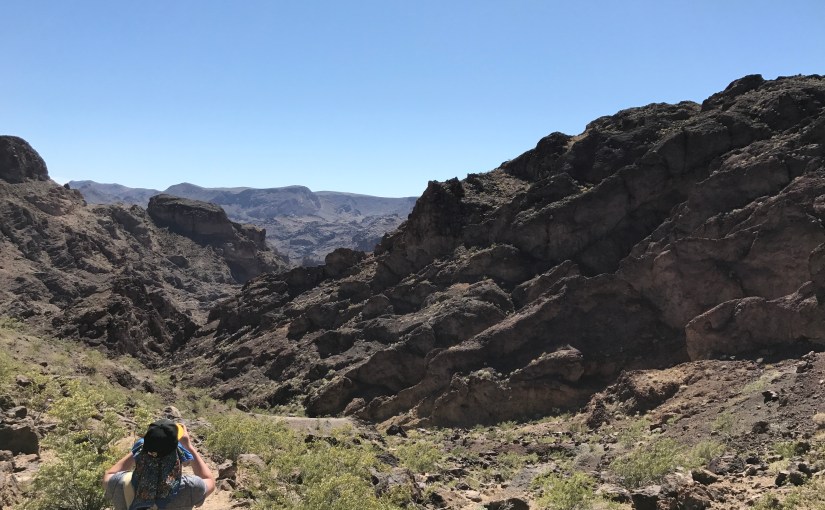
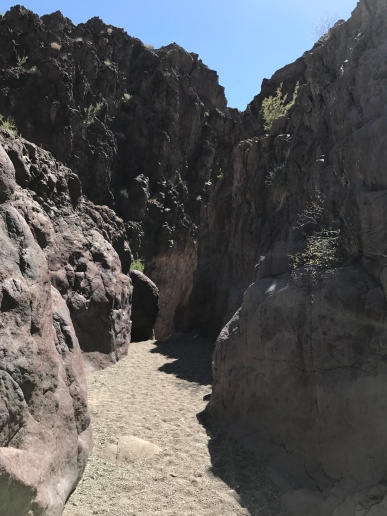
Dry riverbed in the Arizona desert.
Most policyholders would likely be surprised to learn a school bus or Port Authority bus is not an “automobile” covered under their insurance policy. Perhaps recognizing this, the court noted Mrs. Koren’s “concerns must be raised with the legislature.” Unless and until the legislature acts or the Washington Supreme Court reverses this ruling, policyholders should carefully review the terms and fine print of their policies to make sure their coverage comports with their own understanding.




 Seattle Insurance and ERISA Blog